

Everything You Need to Know About the Massive Statue of Unity
Architecture and Art: A Deep Dive into the Adalaj Stepwell
March 23, 2026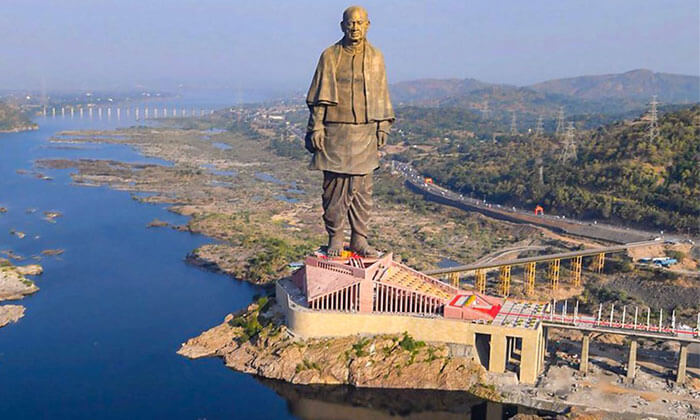
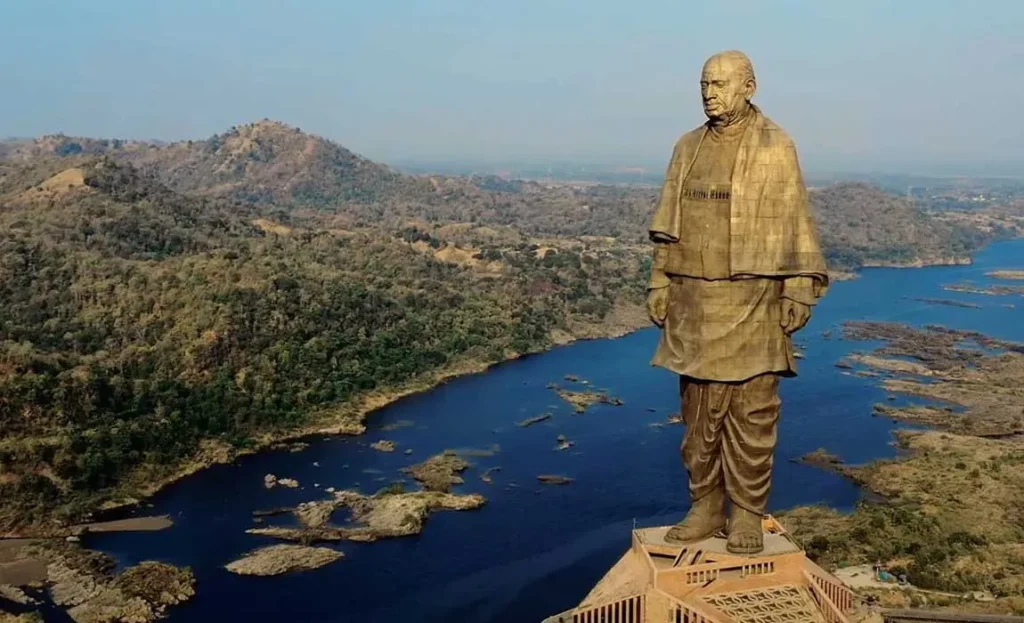
Rising majestically above the Narmada River in the state of Gujarat, India, the Statue of Unity stands as a colossal tribute to one of the most pivotal figures in Indian history: Sardar Vallabhbhai Patel. As the tallest statue in world, it is not merely an engineering marvel but a symbol of national integrity, grit, and the vision of a unified India.
For travellers, history buffs, and architecture enthusiasts, understanding the magnitude of this project requires looking beyond its height. If you are planning an extended trip through Gujarat, perhaps after spending 2 days in Gandhinagar exploring the state’s administrative heart, witnessing this monument is the perfect next step. Here is everything you need to know about the Sardar Vallabhbhai statue, its significance, and the experience of visiting this record-breaking landmark.
The Man Behind the Monument: Sardar Vallabhbhai Patel
Before diving into the technicalities of the structure, it is essential to understand why this monument exists. Sardar Vallabhbhai Patel, often called the “Iron Man of India”, was the first Deputy Prime Minister and Home Minister of independent India.
His greatest legacy was the peaceful integration of over 560 princely states into the Indian Union. Without his diplomatic finesse and firm resolve, the map of India would have looked very different today. The Sardar Vallabhbhai statue was commissioned to honour this “Architect of Modern India”, ensuring that his contribution to the nation’s unity is never forgotten.
Breaking Records: The Tallest Statue in World
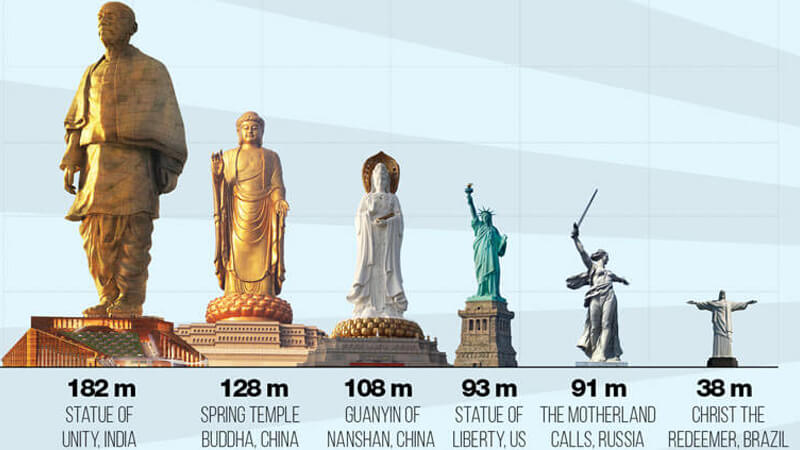
When the Statue of Unity was inaugurated on October 31, 2018 (the 143rd anniversary of Patel’s birth), it officially became the tallest statue of the world, surpassing the Spring Temple Buddha in China by a significant margin.
Standing at a staggering height of 182 metres (597 feet), the statue is nearly double the height of the Statue of Liberty in the United States. The height of 182 metres was specifically chosen to match the number of seats in the Gujarat Legislative Assembly, adding a layer of local democratic significance to the structure.
Location and Setting: The Statue of Unity Place
The Statue of Unity place is as breathtaking as the monument itself. It is located on the river island called Sadhu Bet, near Rajpipla in the Narmada district of Gujarat.
The statue faces the massive Sardar Sarovar Dam, another project named after Patel. Surrounded by the lush Vindhya and Satpura mountain ranges, the location offers a dramatic backdrop. To reach the island, visitors cross a beautifully designed bridge or take a ferry, making the approach to the tallest statue of the world an immersive experience in nature.
Engineering Excellence and Design
Constructing the tallest statue of unity was a feat of modern engineering that took approximately 46 months to complete. Designed by the renowned Indian sculptor Ram V. Sutar, the statue is a larger-than-life representation of Patel in a walking pose, wearing characteristic garments.
Key Technical Facts:
- Materials: The statue is a three-layered structure. The innermost layer consists of two reinforced concrete towers; the second layer is a steel framework; and the outermost layer is clad in 1,700 tonnes of bronze plates.
- Resilience: It is built to withstand wind speeds of up to 180 km/h and earthquakes measuring up to 6.5 on the Richter scale.
- The Iron Campaign: In a unique gesture of national participation, the “Loha Campaign” was launched, where farmers across India donated their used iron farming tools. This scrap iron was melted and used in the foundation of the monument, literally making it a statue built by the people of India.
The Visitor Experience: What to See and Do
Visiting the Sardar Vallabhbhai statue is more than just looking up at a tall figure. The complex is designed as a world-class tourism hub with several attractions:
1. The Viewing Gallery
At a height of 153 metres (roughly at the chest level of the statue), there is a viewing gallery that can accommodate up to 200 people at a time. High-speed elevators whisk visitors to the top in seconds. From here, you get a panoramic view of the Narmada River, the Sardar Sarovar Dam, and the surrounding mountain ranges.
2. The Museum and Audio-Visual Gallery
Located at the base of the statue is a massive museum dedicated to the life and times of Sardar Vallabhbhai Patel. It houses historical documents, photographs, and interactive exhibits that detail the unification of India.
3. The Laser Light and Sound Show
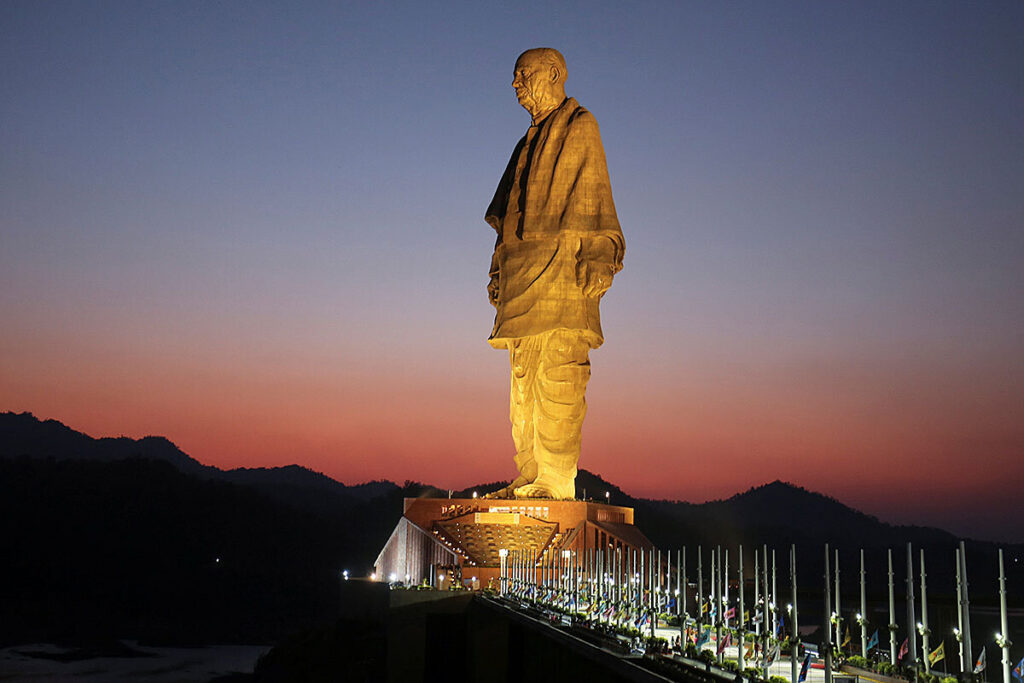
As evening falls, the tallest Statue of Unity becomes the canvas for a spectacular laser light and sound show. The show narrates the history of India’s independence movement and Patel’s role in it, using the statue’s surface as a projection screen. It is a must-watch event for anyone visiting the Statue of Unity place.
4. The Valley of Flowers
Spreading over 230 hectares, the Valley of Flowers is a beautifully landscaped garden featuring over 300 species of flowers, shrubs, and trees. It provides a colourful and serene environment for a leisurely stroll.
Connectivity and Sustainability
The government has gone to great lengths to ensure the Statue of Unity place is accessible and sustainable. The site is connected by well-maintained highways from major cities like Vadodara (90 km), Ahmedabad (200 km), and Surat (150 km). In 2021, the Kevadia railway station was inaugurated, providing direct train connectivity from several major Indian cities.
The project has also boosted the local economy by creating thousands of jobs for the tribal communities in the Narmada district. From ecotourism initiatives to the “Tent City” luxury stays, the area has been transformed into a global tourist destination.
Why It Matters: The Symbolism of Unity
While the title of the tallest statue of the world brings international fame, the true essence of the Statue of Unity lies in its name. In a diverse country like India, the statue serves as a constant reminder of the strength found in togetherness.
It stands as a symbol of “Ek Bharat, Shreshtha Bharat” (One India, Great India). By honouring the man who stitched the fragments of a colony into a single nation, the monument inspires future generations to uphold the values of integrity and national pride.
Conclusion
The tallest Statue of Unity is not just a triumph of concrete, steel, and bronze. It is a testament to India’s growing stature on the global stage and a profound tribute to Sardar Vallabhbhai Patel.
Whether you are marveling at its height as the tallest statue of the world, exploring the history in its museum, or resting at a luxury hotel in Gandhinagar before heading out to enjoy the natural beauty of the Statue of Unity place, the experience is bound to leave you in awe. It is a landmark that every traveler should visit at least once to witness the scale of human ambition and the spirit of a nation.